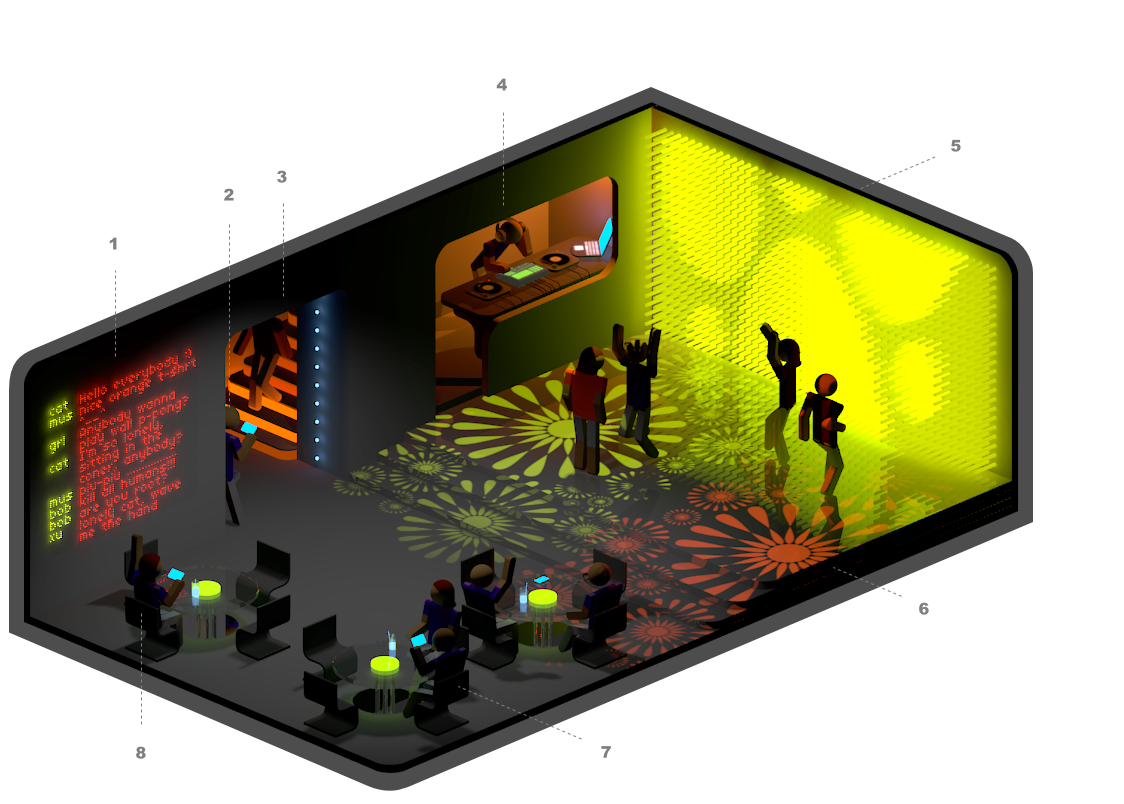
Cafe / teahouse. Interactive interiour.
Local socialising
The LED chat panel on the wall displays messages sent by guests. This is indeed a common online chat, only within a single large space. If the music is too loud and you have lost someone or just want to express yourself, simply type a short message using a browser on your handheld device.Local data sharing
Loved the track and want a copy for yourself? No problem! Download the track (or the entire playlist!) from the standard browser of your handheld device.Interior interactive decoration
Some elements of the interior serve a purely decorative function – such as these lights embedded into the steps that change color under your feet.Sound environment intergration
The DJ controls the lighting and kinetic effects on the dance floor. In fact, the dance floor itself also reacts to the clubbers’ mood.Algorithmically predefined control settings
The built-in kinetic screen on the wall displays visual effects and even changes its own surface. Visual algorithms can be pre-defined at time of purchase, as well as programmed or controlled in real time by the VJ and guests.Using local sensory mesh as a source
The visual effects are not limited to the screen only. Patterns projected on the dance floor can also be either pre-programmed or changed directly during performance. The VJ can use built-in sensors to make the performance even more interactive.Feedback intercommunications
Tell the DJ that you are delighted with his mix: Just click the “thanks” button!Standard browser accessability
If you got bored alone or are a bit shy, drop a line in the chat: You will find new friends in a matter of minutes :)